What Mr. Robot Gets Right About OSINT and Your Digital Footprint
By WhatsMyName Apps team · · 6 min read
Mr. Robot ran on USA Network from 2015 to 2019. Its lead, Elliot Alderson, works as a cybersecurity engineer by day and joins a hacker group called fsociety by night. Many viewers remember the quiet scenes more than the big attacks: Elliot alone at his desk, working out who someone really is from what they have put online.
That habit has a name outside the show: OSINT, short for open-source intelligence. Much of it is less dramatic than TV and easier to do than you might think. This post looks at what the series gets right about profiling people from public information, where it stretches the truth, and what you can do so your own trail is shorter than the ones Elliot follows.
How Elliot builds a profile of someone
In the show, Elliot treats everyone around him as a puzzle. Coworkers, people in his personal life and the targets of fsociety all get the same treatment. He starts with what they share in public and keeps going until he understands their habits and weak spots.
Public social accounts
Photos, check-ins, friend lists and old posts are where he usually starts. None of it is secret. People post it themselves, often years ago, and forget it is still there. A single profile says little, but a few together sketch out where someone works, who they spend time with and what they care about.
Reused usernames
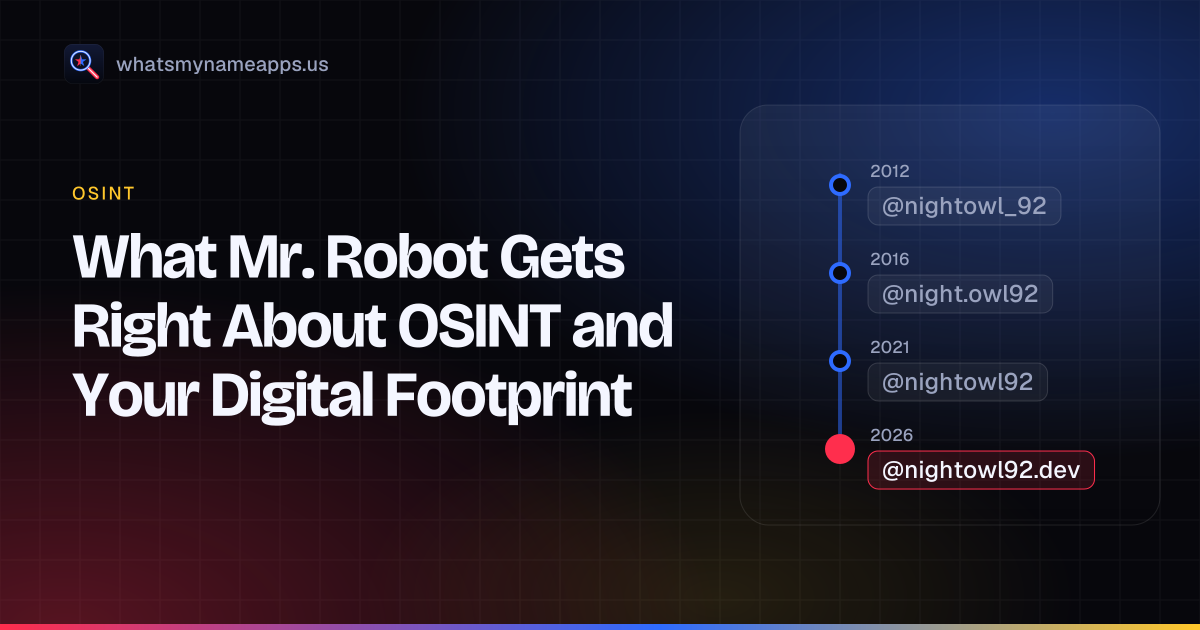
Once you have one handle, you can look for the same name on other sites. Many people pick a username as a teenager and keep it, with a dot or a year added here and there. That one string can tie together a gaming account, a forum profile, a code repository and a photo app. Each one adds a detail the others left out.
Oversharing and social engineering
The series also leans on social engineering, which means getting people to hand over information or access by talking to them. The details you post (a pet's name, a hometown, a favorite band) are the same details some people still use in passwords and security questions. In the show, that link between oversharing and weak security drives much of the plot, and it holds up in real life too.
Mr. Robot hacking: realistic or TV?
The show earned a reputation among security people for getting more right than most hacker dramas. It used real-looking tools and terminology, and it treated people as the weakest link. Its writers clearly cared about the details. But it is still drama, and some things are squeezed for time.
What holds up
- Public data adds up. Facts that look harmless on their own become revealing once someone puts them side by side.
- People are easier to fool than systems. Phishing and pretexting work because they play on trust and routine rather than software flaws.
- Handle reuse is common, and it is one of the simplest ways to connect accounts across sites.
- Passwords built from names and dates are still easy to guess, and people still use them.
What is exaggerated
- Speed. On screen, a full profile comes together in one scene. Real research takes hours or days, with plenty of dead ends.
- Certainty. Elliot rarely gets a match wrong. In practice, the same username on two sites often belongs to two different people, especially when the name is short or common.
- Access. The show moves easily from public information to breaking into private accounts. That step is illegal, and protections such as two-factor authentication make it much harder than the show suggests.
In short, the profiling is the realistic part, and the break-ins are where the drama takes over.
How a username search shows the same trail
You don't need Elliot's skills to see what a stranger could find about you. A username search checks one handle against 3,165 sites and lists where a public profile with that exact name exists. That is the "reused usernames" step from the show, done in the open and without any hacking.
A few of our tools map to the parts of the trail described above:
- The reverse username lookup starts from a handle and shows which sites have an account under it, so you can see how far one name reaches.
- The digital footprint checker helps you review your own handles and spot the old accounts that still point back to you.
- The OSINT username search page explains how researchers use the same checks, with the limits that come with them.
Every result is a lead, not proof. A "found" status means an account with that name exists, not that it belongs to a specific person. Our page on how the checks work explains why false matches happen. If OSINT is new to you, what OSINT is and username OSINT for beginners cover the basics.
How hackers find you online, and how to make it harder
The best defense against an Elliot is to give him less to work with. You can't erase everything, but you can cut the links between accounts and remove what you no longer need.
1. Audit yourself first
Search your own name and every username you have used, including the embarrassing ones from years ago. Our guides on how to search yourself online and how to check your digital footprint walk through it step by step.
2. Use different usernames for different parts of your life
Keep your gaming handle, your professional profile and your anonymous forum name separate. If one leaks, it no longer leads to the rest. For ideas, see how to choose a unique username.
3. Close or lock down old accounts
Forgotten accounts often still show old photos, an old email address or a city you have since left. Track them down with finding your old accounts, then delete them or secure them with the steps in how to secure old accounts.
4. Tighten privacy settings
Hide friend lists, limit who can see past posts and turn off location tags. The social media privacy settings checklist covers the main apps.
5. Stop feeding security questions
Don't use real answers that are easy to find, like your first school or your pet's name. Use a password manager, unique passwords and two-factor authentication on the accounts that matter. If people-search sites list your address, remove yourself from people-search sites as well.
Responsible use: research yourself, not others
Elliot is a fictional character, and much of what he does to the people around him would be illegal or deeply invasive in real life. Don't copy it. Use username searches on yourself, on names you plan to claim, on your own brand, or as part of work you are authorized to do. Stick to public profiles. Never use these tools to track, stalk or harass anyone, and never try to get into an account that isn't yours. Our responsible-use guidelines set out the rules in full.
FAQ
Is the hacking in Mr. Robot realistic?
More than in most TV shows. The way Elliot gathers public information and uses social engineering is close to real life. The speed, the certainty and the ease of getting into private systems are dramatized.
What is OSINT in Mr. Robot?
It is the research Elliot does before he acts: reading public profiles, connecting reused usernames and noting what people overshare. Reading public information is generally legal. Breaking into accounts is not.
How do hackers find people online?
Mostly through what people publish themselves: social profiles, reused handles, tagged photos and old accounts. Phishing and other social engineering then target the details they find.
Can a username search find all my accounts?
No. It finds public profiles that use the exact handle you enter, on the sites in our list. Accounts under other names, private profiles and sites outside the list won't show up.
Mr. Robot is a trademark of its owners; this post is independent commentary. This site is not affiliated with or endorsed by the show, USA Network or NBCUniversal, or by the WhatsMyName project.
Check a username now. Free, no sign-up, 3,165 sites. Try the username search

Search usernames on your phone. Get the free Android app. Scans run on your device.

Related in OSINT
- OSINT
Best Username Search Apps for Your Phone: What to Look For
How to pick a username search app for your phone: the features that matter, the red flags to skip, and when a web tool beats installing anything.
· 5 min read
- OSINT
Sherlock vs Maigret vs WhatsMyName: Which Username OSINT Tool to Use
Sherlock, Maigret and WhatsMyName compared from their own documentation: site coverage, output, profile parsing, setup, and which one fits your username investigation.
· 6 min read
- OSINT
What Is OSINT? A Plain-English Guide
What OSINT means, where the term comes from, who uses it, common sources and tools, the legal and ethical limits, and how to start with your own footprint.
· 6 min read
More from the blog
- How to Search a Username on Your Phone (3,150+ Sites on Android)
- Reserve Your Username Before You Launch: A Phone Checklist
- Find Forgotten Accounts Using Only Your Phone
- We Checked 60 Usernames Across 3,166 Sites: Here's What We Found
- How to Get a Custom Bluesky Handle With Your Own Domain
- Bluesky Handle Availability: How to Check and Claim Yours